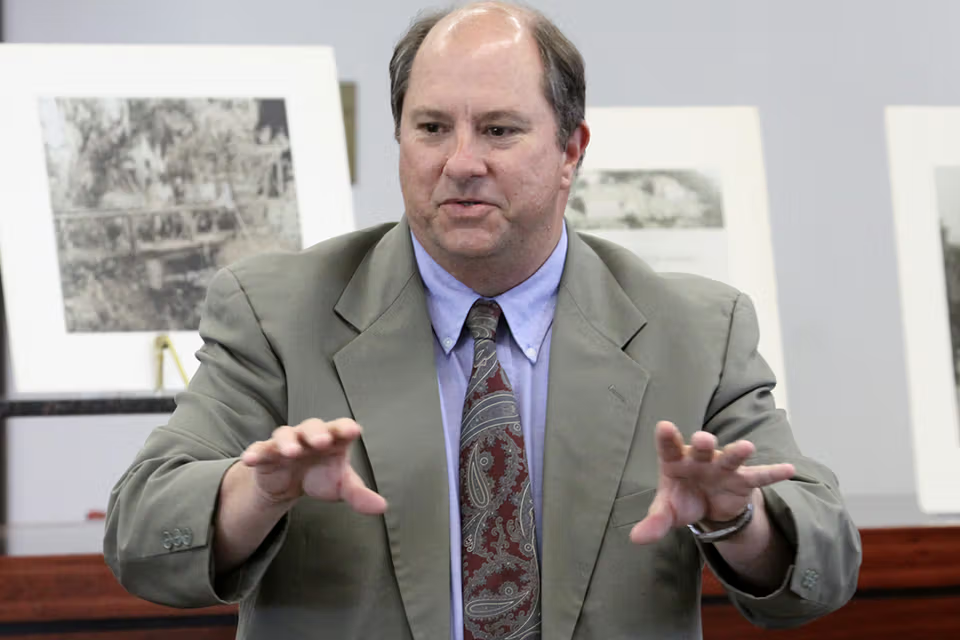
Center for Florida History
Hosts the Florida Lecture Series and offers student internships in Florida history collections.


The School of Arts and Sciences is the largest and broadest school at Florida Southern, spanning five divisions and more than 35 majors. It is where most of the college's teaching happens, from marine biology and chemistry to musical theatre, criminology, and public opinion research.
Whatever Florida Southern students end up majoring in, they take courses in Arts and Sciences to get there, building the same foundation alongside their major: how to read closely, argue clearly, handle evidence, and work across disciplines. That shared grounding is why adding a second major or a minor from another school is routine here, and why graduates leave able to do the things that are hardest to teach on the job.
Nine divisions, dozens of paths, and a foundation that works no matter which one you pick.
From marine biology to musical theatre, with room to double major or add a minor from any school on campus.
Chemistry, music, and medical laboratory sciences each hold discipline-specific national accreditation.
Small classes put you in the front row of every class, with professors who know your name and your goals.
Ranked among Regional Universities in the South by U.S. News & World Report for forward-thinking academics.
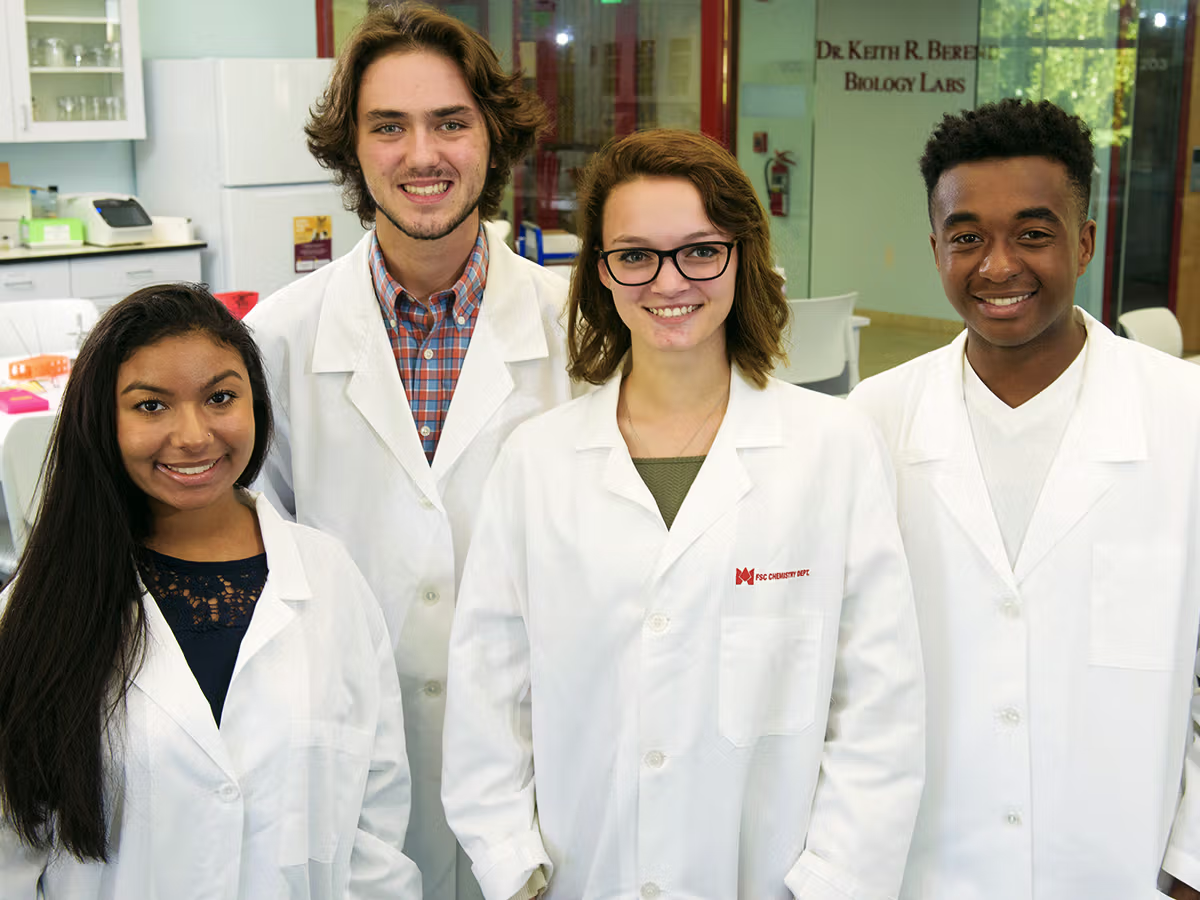
Students aiming at health professions school follow a structured path here, not a list of suggested courses. They declare their intent in the first semester and work with the Science and Pre-health Career and Internship Coordinator through workshops, one-on-one advising, clinical observation, and volunteer placements.
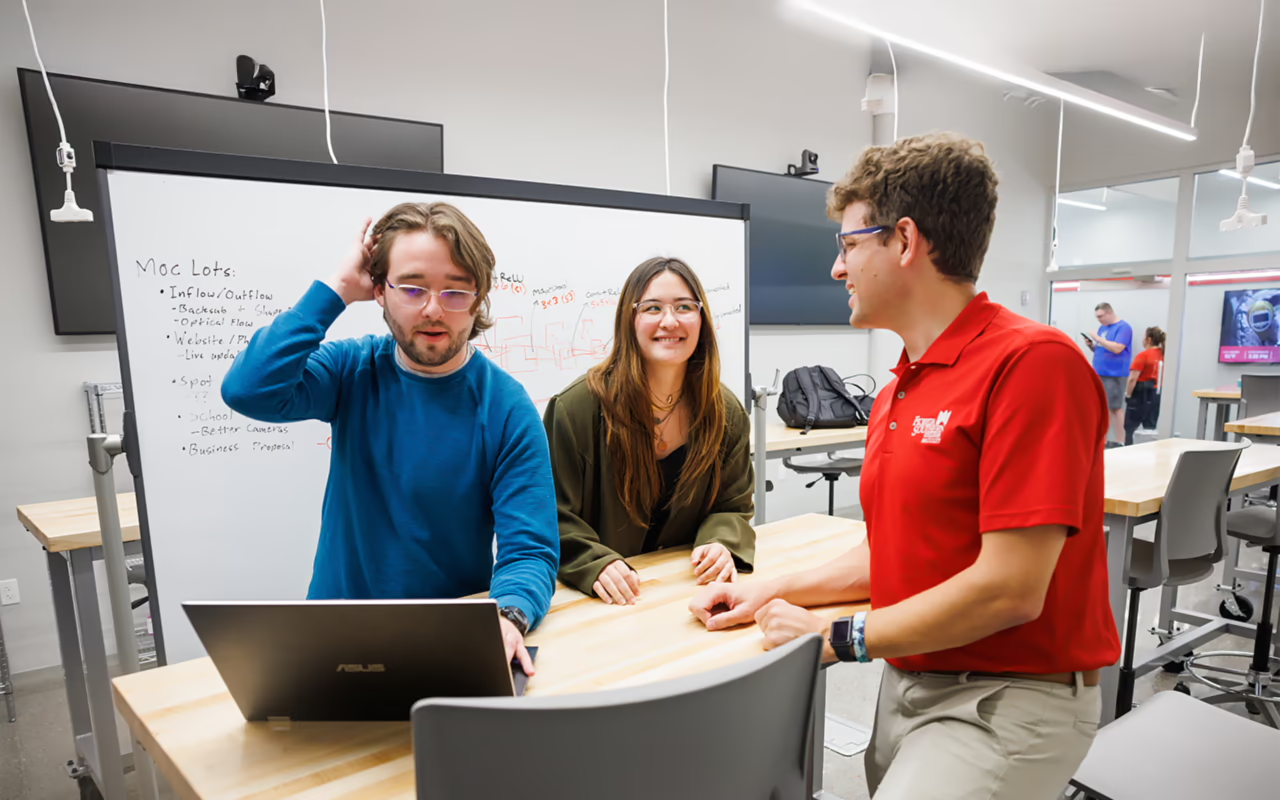
Hands-on experience here is not an opportunity for the ambitious few. Every student completes a high-impact experience before graduating: original research with a faculty mentor, a senior capstone, an internship in the field, or a public performance or exhibition.
For students who want to push further, the Honors College is built around one ambitious idea. Honors students spend two years in cross-disciplinary seminars, then two years developing and executing a senior project of their own design.
Past projects have ranged from research on the evolutionary history of the human eye to a chapbook of original poetry, a composed and performed concerto, and a sustainable business built from scratch. Every project is presented either at Fiat Lux, Florida Southern's campus-wide celebration of student scholarship, or at a professional conference in the student's own field.
Research and public work happen in named centers across the school, several of them open to undergraduates from the first year.
Hosts the Florida Lecture Series and offers student internships in Florida history collections.

Students design, run, and analyze original public opinion polls and policy evaluation projects.

Partners with judges, attorneys, and K-12 teachers on nonpartisan civic and law-related education across Florida.
Questions about a major, a division, or how to fit two of them into four years? The dean's office can point you to the right faculty member.
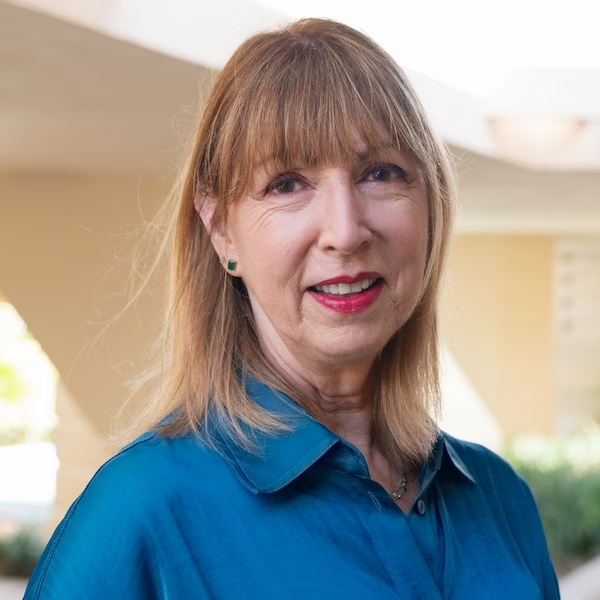
Dean of the School of Arts and Sciences, Associate Professor of Mathematics
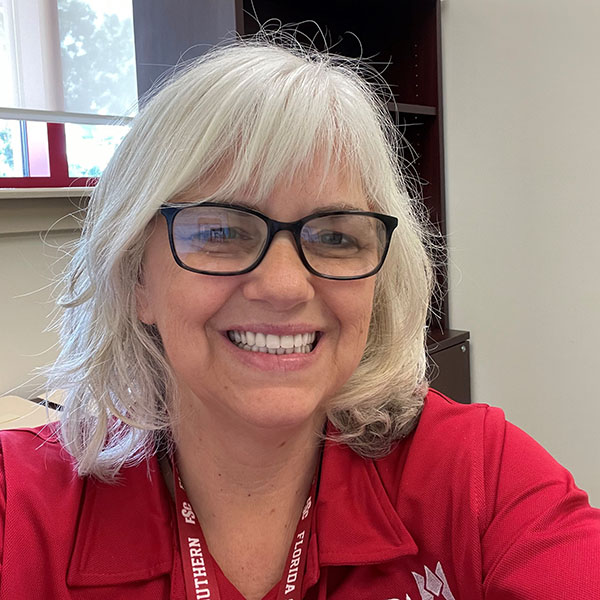
Administrative Assistant

Every path here starts the same way, with a conversation. Come see the campus, ask about a major, or start your application.