
4+1 Master of Science in I/O Psychology
Already a Florida Southern student with your sights on organizational psychology? Start your master's during your senior year and earn both your bachelor's and your MSIO in about five years, saving a year and a full year's tuition on the way.

New to the 4+1 model? See how accelerated programs work, including eligibility and tuition savings, on the Accelerated Program Options page.
The Same MSIO Degree, Started Early
Industrial and organizational psychology explores how people perform at work, what motivates them, and how organizations can foster success for both individuals and teams.
If you're an FSC student intrigued by these questions, the 4+1 Master of Science in Industrial and Organizational Psychology offers a unique opportunity: you can begin graduate-level coursework in your senior year and start making an impact sooner.
The 4+1 path leads to the same Master of Science in Industrial and Organizational Psychology as our regular degree program: the same 33-hour curriculum, the same faculty, the same outcomes. You'll gain expertise for careers in research, consulting, or coaching across public and private sectors, helping organizations boost productivity, efficiency, and collaboration. The key difference with the 4+1 path is timing: as a qualified FSC undergraduate, you begin your graduate studies during your senior year, allowing you to complete your master’s in about one additional year instead of two.
The Four Designated 4+1 Courses
As a 4+1 student, you'll take these graduate courses during your senior year, counting toward both degrees:
- PSY 6100 Statistics and Research Methods I
- PSY 6150 Industrial Psychology
- PSY 6200 Statistics and Research Methods II
- PSY 6250 Organizational Psychology

A STEM-Designated Degree
The MSIO is a STEM-designated program. For eligible international students, that designation supports an extended period of Optional Practical Training (OPT) in the U.S. after graduation, giving you additional time to build career experience in the field.
4+1 Admission Requirements
The 4+1 MSIO path is for current Florida Southern undergraduates. Apply during your junior year. To be eligible you should be:
- Enrolled at Florida Southern and in good academic standing
- On track to reach senior status (about 93 completed credit hours) before beginning graduate coursework, with a minimum 3.0 cumulative GPA
- Completing or have completed PSY 3336 Industrial-Organizational Psychology and PSY 3310 Research Design
- Approved by the MSIO Program Director
Recommended preparation. To get the most from the program, we also recommend prior coursework in elementary statistics, social psychology, and tests and measurements. As an FSC student, you can plan these into your undergraduate schedule before you begin graduate coursework.
Your application includes a current resume, an academic reference (preferred), and a personal statement responding to five prompts on your interest in I/O psychology, how the program fits your goals, your preparation, your academic strengths and weaknesses, and a time you worked as part of a team.
How 4+1 Billing Works
Because you begin graduate courses before your bachelor's is awarded, those credits are billed at your undergraduate tuition rate, which is how the 4+1 saves you money. Once you earn your bachelor's, the remaining MSIO coursework is billed at the graduate rate. Current per-credit rates are on the Tuition and Costs page.
Student Voices
One-on-one faculty mentorship, hands-on learning, and a schedule built around your senior year — Florida Southern's Master of Science in Industrial and Organizational Psychology prepares you to lead change in the workplace. See why these Mocs chose the 4+1 path.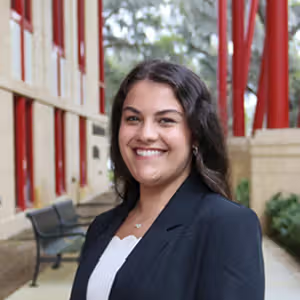
"I chose FSC because of the 4+1 program opportunity. I was able to complete my master's degree in one additional year rather than the typical 2 years post-grad. I was able to learn a lot of information in a variety of areas within IO Psychology. I appreciated being able to get a perspective from an academic side, as well as an industry side from the different professors of the program. The faculty contributed to my academic success by being understanding and flexible. They know the real world is never perfect, so they do not expect the students to be perfect."

Every person within a company is important and is a valued member of the organization. I believe this degree in Industrial and Organizational Psychology will provide me with the tools and understanding I need to better serve my fellow employees. One of the most impactful aspects has been working in the EMPOWER Lab — the ability to collaborate with fellow graduate researchers, professional mentors, and even undergraduate researchers on a wide range of I-O topics. It's real-world, marketable skills that are transferable to any field or organization.
Meet the Faculty
The 4+1 puts you alongside our faculty a year early. Here's how they think about teaching, research, and preparing you for the field.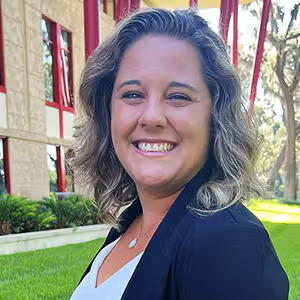
I believe that education is, as Nelson Mandela once said, 'the most powerful weapon which you can use to change the world,' and that I, as an instructor, have a responsibility to each and every one of my students to provide the best learning experience possible so that they will be prepared and ready when they go out into the real world.

"We equip our IO Psychology scholars with strong foundational knowledge of human behavior so they can apply solutions in the workplace. Our program caters to the everyday professional who wishes to apply theories in organizational development, career development, decision theory, consumer behavior, and small group processes to advance in their field or industry."
Get in Touch
Ready to start early? Talk with the Adult and Graduate Admission about the 4+1 path.

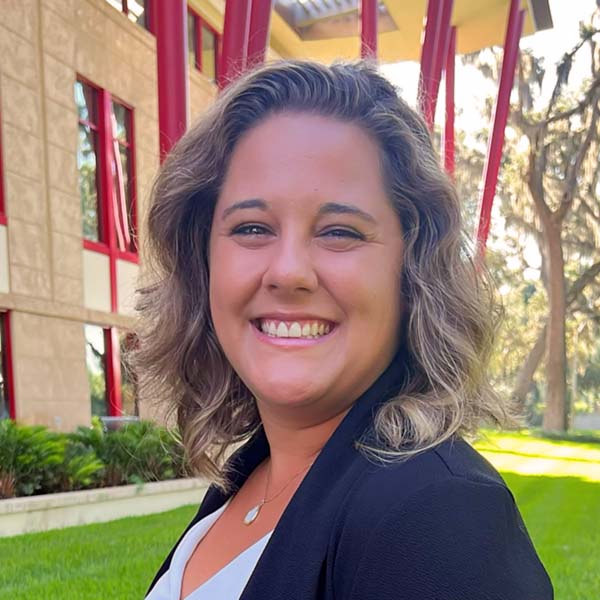
Victoria Lew, Ph.D.
MSIO Director, Assistant Professor of Psychology
- 863.680.5049
- vlew@flsouthern.edu
- Ordway - 161