Florida Southern College is honoring its deep roots in Florida's citrus industry through
the rehabilitation of two historic campus citrus groves, preserving an important part
of the College's heritage while creating new opportunities for education and engagement.
The return of these groves represents more than a historically significant milestone
for the College. They will also enhance opportunities for agricultural research and
workforce development while supporting broader efforts to strengthen Florida’s citrus
industry. As citrus farmers continue to confront the challenges of Huanglongbing (HLB),
commonly known as citrus greening, the groves will provide a platform for evaluating
production practices and emerging technologies designed to improve tree health, resilience,
and long-term sustainability.
The citrus groves were reestablished through a collaborative effort among industry
partners and the Florida Southern community, creating a unique partnership between
higher education and Florida's agricultural sector. Made possible through the generosity
and vision of Florida Southern alumnus Phillip Rucks '83 and Rucks Nursery, as well
as Mike Hurst of Citrus Service, Inc. the project reflects a shared commitment to
investing in future generations of agricultural leaders and creating meaningful opportunities
for students to gain hands-on experience in one of Florida’s most cherished industries.
"Florida agriculture has always been built on innovation, and these citrus innovation
groves represent an investment in the future of agribusiness. Through these living
laboratories, our students will gain hands-on experience with the rootstock varieties,
protective technologies, and production systems that are helping the industry address
citrus greening and build more resilient citrus operations,” said Dr. Michael Weber,
Dean of the Barney Barnett School of Business and Free Enterprise. “We are deeply
grateful to Phillip Rucks, Mike Hurst, and our industry partners whose generosity
is creating opportunities for future generations of students while helping preserve
an industry that is central to Florida's economy and identity.”
Rucks Nursery provided the trees that form the foundation of the project. The trees
themselves are composed of a rootstock developed by the nursery that is resistant
to the HLB citrus greening disease. Additionally, Citrus Service, Inc. donated citrus
tree tents that help protect the young trees from additional threats, such as the
HLB transmitting pest, the Asian citrus psyllid. The tents also help to protect the
trees from heat stress, sunburn, and moisture loss during the hot Florida summers.
Reducing this strain adds another layer of resistance against citrus greening, ensuring
the trees and subsequent citrus they produce have a long and lasting impact on both
the Florida Southern community and the citrus industry overall.
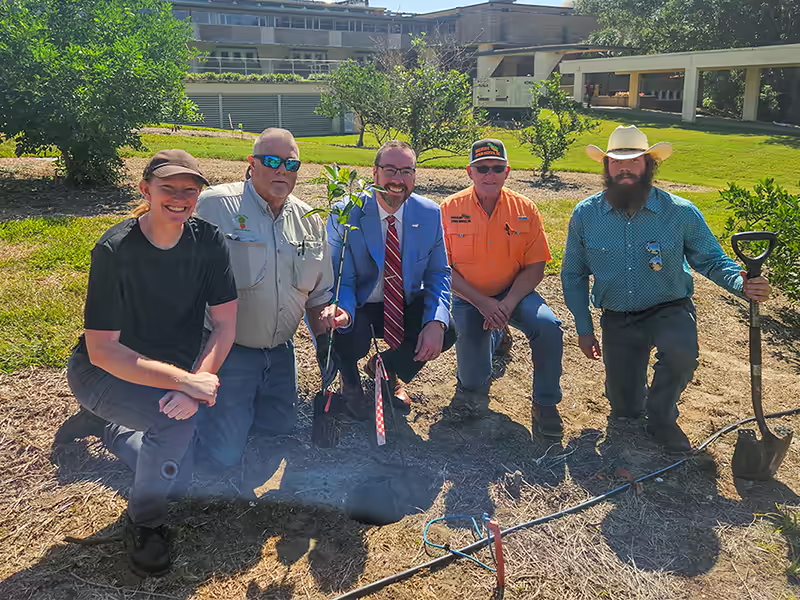
On the official reinstallation day of both groves, Florida Southern Horticulture,
Land, and Resource Management students worked alongside Assistant Professor of Horticulture
Science Dr. Shea Keene, facilities staff, faculty and college leaders to plant the
groves and develop a long-term plan for research, maintenance, and educational use.
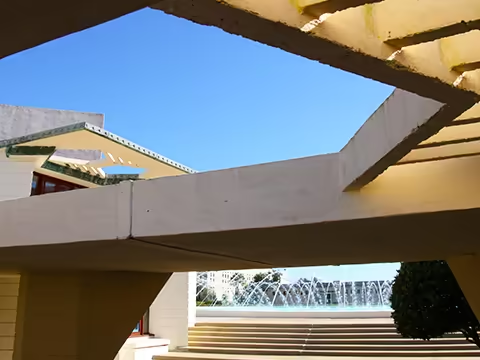
For more than a century, citrus has been woven into the history and academic identity
of Florida Southern College. When the college relocated to Lakeland in 1921, the campus
was built atop a former citrus grove, and over the decades Florida Southern strengthened
that relationship to the citrus industry through academic programs, industry partnerships,
and the eventual implementation of the Citrus Institute in 1947 which offered the
first classes in grove management for the state of Florida. Today, the College continues
to honor and advance this legacy through its citrus archives and agricultural education
programs.
This project reflects Florida Southern's commitment to advancing agribusiness innovation
and preparing the next generation of agricultural leaders. As the citrus groves mature,
they will support applied research, experiential learning, and industry collaboration
while providing students with direct experience addressing the challenges and opportunities
shaping the future of Florida agriculture.